




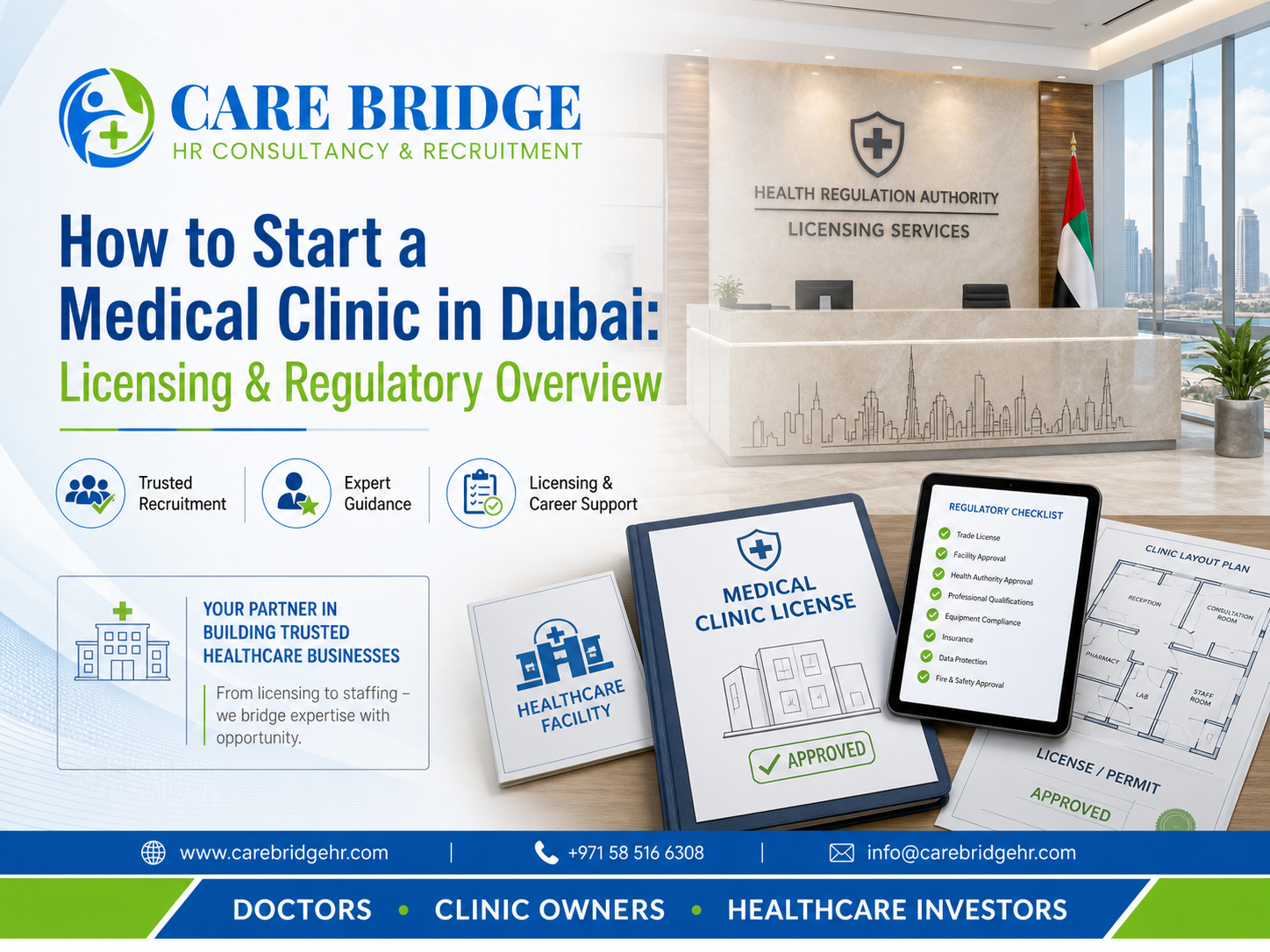
How to Start a Medical Clinic in Dubai: Licensing & Regulatory Overview
Opening a medical clinic in Dubai can be a strong business move, but it is not a simple commercial setup. It combines business licensing, healthcare facility approval, professional licensing, and ongoing compliance. Investors and healthcare professionals need to plan both sides from the start. A clinic must work as a business, but it must also satisfy medical regulation, patient safety rules, facility standards, and staffing requirements.
That is why early planning matters. Many founders focus first on location, branding, or equipment. Those points matter, but regulatory structure comes first. Dubai Health Authority’s official New Healthcare Facility License service makes that clear. DHA states that the service applies to new facilities such as clinics and that applicants may need a floor plan, proposal letter or business plan, and trade license if available. DHA also notes that obtaining a trade license before applying is optional at that stage, which shows that commercial and medical approvals run in parallel rather than as a single step.
For Care Bridge Human Resource Consultancies, this topic fits naturally into the wider licensing journey. Care Bridge’s healthcare licensing support page presents UAE healthcare licensing as a structured process that requires regulatory accuracy, documentation control, and authority-specific planning. Its DHA licensing guide also explains how licensing in Dubai depends on proper title alignment, authority approval, and compliant activation. That same compliance mindset matters when the applicant is opening a clinic rather than joining one.
Why clinic setup in Dubai requires two tracks
A medical clinic in Dubai does not open through one approval only. It moves through two connected tracks.
The first track is the business and commercial side. This includes the legal structure, trade license process, and activity selection. Dubai’s official Invest in Dubai business activities portal shows that business activity classification is a formal part of the licensing environment. That matters because a clinic must sit under the correct business activity and legal structure before it can operate properly.
The second track is the healthcare regulatory side. DHA reviews the facility, the service model, the staffing structure, and the readiness of the clinic as a healthcare environment. In other words, opening a clinic means building a compliant healthcare facility, not just renting a unit and hiring doctors. DHA’s new facility license service confirms that applicants must follow a dedicated health facility route, and that the facility license must later be activated before operations begin.
This is exactly why founders should plan commercial and medical compliance together.
Step 1: Register the business structure correctly
The starting point is the business structure. Investors need to choose the legal form, define ownership, and register the right activity. That sounds basic, but it often drives later delays. If the commercial setup does not match the intended healthcare activity, the project can slow down before DHA even completes its review.
Dubai’s Invest in Dubai business activities portal exists for this reason. It helps applicants identify and review the business activity framework used in Dubai’s licensing environment. This step matters because healthcare businesses sit inside a controlled regulatory category.
At this stage, founders should also think carefully about scope. A general clinic, dental center, specialty clinic, aesthetic facility, or diagnostic-focused center may not follow the exact same operational model. The earlier that scope is clear, the easier it becomes to match the commercial and medical pathway.
Care Bridge’s healthcare licensing support page is useful here because it frames UAE healthcare entry as a compliance process rather than a paperwork exercise. Care Bridge’s Unified UAE Healthcare Licensing article also reinforces an important point: even where alignment improves across the UAE, authority-specific execution still matters in practice. That matters for clinic founders because Dubai still requires the correct Dubai-side approvals and facility structure.
Step 2: Apply for DHA facility approval
Once the project structure and service model are clear, facility approval becomes central. DHA does not approve clinics in theory only. It looks at the actual facility setup and whether the premises can support safe, compliant care.
DHA’s official New Healthcare Facility License page shows that a floor plan from an engineering or design company and a proposal letter or business plan form part of the process. That signals something important: layout and operational intent matter early. DHA wants to know what the clinic will do and whether the physical design supports that service safely.
In practical terms, founders should expect DHA to look closely at three areas.
The first is clinic layout. Room use, patient flow, privacy, treatment areas, and support areas must match the intended healthcare services.
The second is equipment compliance. A clinic should not plan services that its approved design and equipment list cannot safely support.
The third is staffing structure. A clinic needs a professional setup that matches the services it wants to offer. That includes licensed practitioners, clinical responsibility, and often a medical director or equivalent leadership structure depending on facility type.
This is where many projects slow down. Some founders lease a space before confirming that the layout can support the intended service mix. Others underestimate how closely facility design and clinical scope are linked. DHA’s process makes clear that facility licensing is more than a form submission.
Step 3: License every healthcare professional properly
A clinic cannot operate on facility approval alone. Every healthcare professional in the clinic must hold the correct professional license and employment arrangement for the role they perform.
Care Bridge’s DHA licensing guide explains that healthcare professionals need DHA registration and license activation to practise legally in Dubai. That matters for clinic founders because staffing is part of the regulatory model, not a later HR detail. The clinic may secure premises and facility progress, but it still needs licensed professionals to deliver care legally.
This also means hiring strategy should begin early. Doctors, dentists, nurses, pharmacists, and allied health professionals often move through verification, licensing, and employer-linked activation steps before they are fully ready to practise. A founder who leaves staffing too late may finish the facility phase and still face delays before opening day.
Care Bridge’s Frequently Asked Questions page supports this wider view by positioning licensing, recruitment, and onboarding as connected parts of one healthcare workforce pathway. For clinic founders, that is the right mindset. Facility readiness and staff readiness should move together.
Financial planning: what founders should budget for
Clinic setup in Dubai requires more than regulatory approvals. Founders also need realistic financial planning.
The first cost group is setup and fit-out. Healthcare premises often need specialized design, fit-out work, and compliant equipment planning.
The second cost group is rent and location overhead. A strong location can improve patient access, but it also affects the project’s cash flow from the beginning.
The third group is equipment investment. Clinical equipment, diagnostic tools, IT systems, and secure records infrastructure all add to the startup cost.
The fourth group is insurance and compliance support. Professional indemnity, business coverage, and advisory support may all become part of the real startup budget.
DHA’s licensing process signals why these costs matter. When a floor plan, business plan, and facility readiness form part of the approval pathway, financial planning becomes part of compliance planning too. A clinic that underestimates setup cost may face delays not because the business idea is weak, but because it cannot complete the compliance journey on time.
Common mistakes that delay clinic opening
One common mistake is treating trade licensing and DHA facility licensing as separate worlds. They are different, but they affect each other.
Another mistake is choosing a space before confirming that the layout can support the intended clinic scope.
A third mistake is delaying staff licensing. A founder may secure the premises but still lack ready-to-practise professionals.
A fourth mistake is weak activity planning. If the business activity, facility design, and service model do not align, the file can become harder to move.
Care Bridge’s healthcare licensing support page remains relevant here because it emphasizes structured planning, correct documentation, and authority-specific execution. That approach reduces avoidable setbacks before they become expensive.
FAQ: Starting a medical clinic in Dubai
Do I need both a trade license and DHA approval to open a clinic in Dubai?
Yes. A clinic needs both the business setup side and the healthcare regulatory side. Dubai’s Invest in Dubai business activities portal supports the commercial activity side, while DHA’s official New Healthcare Facility License covers the healthcare facility approval path.
Does DHA inspect the clinic layout before approval?
DHA’s facility licensing process requires a floor plan and reviews the facility as a healthcare environment, which means layout and design matter from the start under the official facility licensing service.
Can I open the clinic before my staff receive DHA licenses?
No. Healthcare professionals need the correct DHA licensing status to practise legally in Dubai, as Care Bridge explains in its DHA licensing guide. Facility readiness does not replace professional licensing.
What usually causes delays in clinic setup?
The most common delays come from misaligned business activity selection, non-compliant facility layout, incomplete documentation, and late staff licensing preparation. DHA’s facility process and Dubai’s business activity structure both show why those points matter.
Why should founders plan commercial and medical compliance together?
Because a clinic is both a regulated business and a regulated healthcare facility. Care Bridge’s healthcare licensing support page reflects that wider compliance approach across UAE healthcare projects.
Conclusion
Starting a medical clinic in Dubai requires more than commercial ambition. It requires structured regulatory planning from the first step. Founders need the right business structure, the right activity classification, DHA facility approval, and fully licensed healthcare professionals before the clinic can operate safely and legally.
The strongest clinic projects treat commercial setup and medical compliance as one connected plan. That approach reduces delays, improves readiness, and protects the long-term value of the business. For Care Bridge Human Resource Consultancies, that is the core message behind healthcare setup in Dubai: successful clinic launches depend on compliance as much as investment. A well-planned clinic is not just easier to open. It is stronger from day one.