





DHA Licensing for Dentists Explained: 2026 Guide
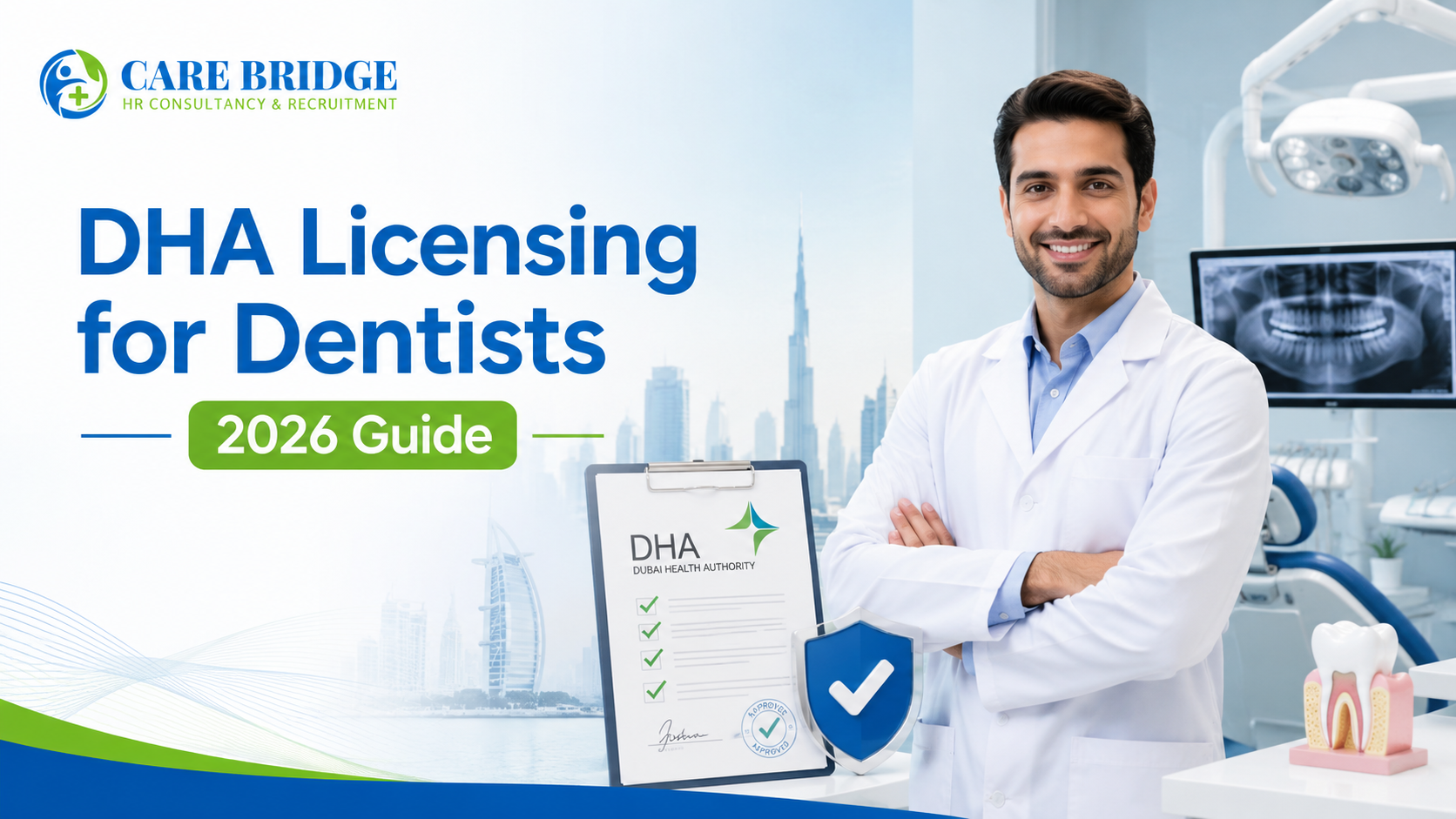
Dentists who want to practise in Dubai must follow the Dubai Health Authority licensing pathway. A valid DHA license confirms that the dentist meets the required education, experience, verification, and professional standards for dental practice in Dubai.
For international dentists, the process can feel complex at first. It may include degree verification, clinical experience review, Primary Source Verification, exam requirements, eligibility approval, and license activation through a Dubai healthcare facility. Specialist dentists may also need additional certification validation and evidence of specialty training.
A clear understanding of DHA licensing for dentists helps candidates avoid delays, prepare stronger applications, and apply for the right dental role from the start. Care Bridge Human Resource Consultancies supports dentists and healthcare professionals with UAE licensing guidance, recruitment preparation, document review, and employer coordination.
This 2026 guide explains DHA licensing for dentists, the key requirements, the difference between general and specialist dental pathways, and the steps dentists should follow before practising in Dubai.
DHA Licensing for Dentists: Why It Matters
Dubai has a strong and competitive healthcare market. Dental clinics, hospitals, aesthetic centres, specialist practices, and multidisciplinary medical centres continue to recruit qualified dentists from around the world. However, dentists cannot practise in Dubai without the correct DHA registration and license activation.
The Dubai Health Authority explains that professional registration confirms the applicant meets the requirements for the applied category, title, and specialty. The registration is valid for one year, and a healthcare facility must activate it into a license before the professional can start practising through the official DHA healthcare professional registration service.
This means DHA eligibility is an important step, but it is not the same as an active license. A dentist may receive eligibility, yet still need an employer, facility activation, and final onboarding before seeing patients.
Dentists who need help preparing their licensing pathway can review CareBridge’s healthcare licensing services for DHA, DOH, MOHAP, and wider GCC licensing support.
Who Needs a DHA Dental License?
Any dentist who wants to practise clinically in Dubai needs the correct DHA approval. This includes general dentists, dental specialists, consultants, and other dental professionals working in approved healthcare facilities.
The category depends on education, experience, specialty training, professional registration, and clinical history. A General Dentist pathway differs from a Specialist Dentist pathway. Specialist areas may include orthodontics, oral surgery, endodontics, periodontics, prosthodontics, paediatric dentistry, restorative dentistry, oral medicine, and other recognised dental fields.
The DHA Professional Qualification Requirements, known as PQR, define licensing standards for healthcare professionals across categories, including dentists. Dentists should review the relevant title and specialty requirements carefully before applying through the official DHA PQR 2025 document.
Applying under the wrong title can delay the process. For example, a dentist with general practice experience should not apply as a specialist unless the postgraduate qualification, training, certification, and experience clearly support that title.
Key Requirements for DHA Licensing for Dentists
The exact requirements may vary by dental title and specialty. However, most dentists should prepare for several core requirements.
1. Recognised Dental Degree
Dentists must hold a recognised dental qualification that matches the applied category. General dentists usually need a primary dental degree. Specialist dentists need additional postgraduate qualifications or specialty certification accepted for the requested specialty.
The degree documents should be clear, complete, and consistent with the applicant’s passport, CV, professional registration, and experience letters.
2. Clinical Experience
DHA reviews professional experience to confirm whether the applicant has enough relevant clinical background. Experience letters should show the facility name, job title, department, employment dates, working status, and dental duties.
Specialist dentists must show experience that matches their specialty. A general dental role may not support a specialist title unless the candidate has recognised specialty training and relevant specialist practice.
Candidates can prepare their records using CareBridge’s UAE licensing document checklist before starting the application.
3. Professional License or Registration
Dentists usually need proof of current or previous professional registration from their home country or another country of practice. This confirms that the dentist has practised under a recognised regulatory system.
A Good Standing Certificate may also be required, especially where the applicant has held previous professional registration. Dentists should request this early because delays can affect the full licensing timeline.
4. Primary Source Verification
DHA requires verification of key professional documents. The DataFlow Group states that it has worked with DHA as a trusted verification partner and screens credentials for healthcare professionals within Dubai’s healthcare sector through the DHA DataFlow verification pathway.
Primary Source Verification may cover education, experience, professional licenses, and other credentials. Dentists should submit accurate documents with matching names, dates, and issuing authority details.
5. DHA Exam, If Applicable
Some dentists must pass a DHA exam depending on the title, specialty, qualification, and exemption rules. Exam requirements can vary, so candidates should confirm the correct pathway before booking or preparing.
Dentists should not assume that every category follows the same exam route. A general dentist and a specialist dentist may face different assessment expectations.
General Dentist vs Specialist Dentist Licensing
One of the most important parts of DHA licensing for dentists is selecting the correct title. A General Dentist usually provides broad dental care, diagnosis, treatment planning, restorations, preventive care, and routine dental procedures within the approved scope.
A Specialist Dentist applies under a defined specialty area. This pathway normally requires postgraduate specialty education, clinical training, and experience in that specialty. DHA may also review the specialty certificate, training structure, issuing institution, and professional experience after the qualification.
Specialist dentists should prepare stronger evidence because the authority needs to confirm that the applicant meets the applied specialty standards. Additional certification validation may apply if the qualification, training, or registration history needs further review.
Although the article focuses on dentists, title selection works similarly across healthcare licensing. CareBridge explains the wider principle in its guide on Specialist vs General Practitioner licensing in the UAE.
DHA Licensing Process for Dentists: Step by Step
The process may vary by case, but dentists can usually expect the following pathway.
Step 1: Check Eligibility and Title
Start by confirming whether you should apply as a General Dentist, Specialist Dentist, or another dental category. Review your degree, postgraduate qualifications, experience, and current registration before selecting the title.
Step 2: Prepare Documents
Collect your passport, photo, CV, dental degree, transcripts if required, internship or training certificates, professional license, experience letters, Good Standing Certificate, and specialty certificates if applicable.
Your CV should match your experience letters. Mismatched dates, unclear titles, or incomplete facility details can trigger delays.
Step 3: Complete Primary Source Verification
Submit the required documents for DataFlow verification. Make sure issuing institutions can respond to verification requests. If a university, employer, or licensing authority does not respond, the process may take longer.
Step 4: Complete DHA Exam or Assessment, If Required
If your dental category requires an exam, prepare according to the correct scope. Do not book the wrong exam or rely on outdated advice. Exam requirements can change, and exemptions may depend on qualifications or professional background.
Step 5: Submit DHA Registration Application
After documents and verification steps are ready, submit the DHA registration application through the official licensing system. DHA’s Sheryan platform is the digital gateway for healthcare professionals and facilities in Dubai through the Dubai Health Licensing System.
Step 6: Employer Activation
Once eligibility or registration approval is granted, a Dubai healthcare facility must activate the license. This step connects the dentist to the employer facility before clinical practice begins.
Dentists should also understand how licensing connects with visa and employment steps. CareBridge explains this sequence in its guide on visa and healthcare licensing in the UAE.
Common Mistakes Dentists Should Avoid
Many DHA dental licensing delays happen because applicants start without checking the details. Common mistakes include applying under the wrong title, submitting incomplete experience letters, using expired professional licenses, missing Good Standing Certificates, and providing unclear specialty documents.
Specialist dentists should take extra care. A postgraduate certificate alone may not be enough if it does not meet the expected specialty pathway. The authority may need evidence of structured training, clinical experience, or recognised certification.
Another mistake is assuming that DHA eligibility means immediate work approval. It does not. The dentist still needs employer activation before practising.
Dentists searching for suitable roles can review CareBridge healthcare job openings and align applications with realistic licensing timelines.
How CareBridge Supports Dentists
Care Bridge Human Resource Consultancies helps dentists understand the DHA pathway before they commit to job offers, exams, or document submissions. This support helps reduce errors and improves application readiness.
CareBridge can support dentists with:
- DHA dental licensing pathway guidance
- General Dentist and Specialist Dentist category review
- Document readiness checks
- DataFlow preparation guidance
- Employer coordination
- Interview preparation
- UAE and GCC healthcare recruitment support
This approach helps dentists avoid rushed applications and unclear timelines. It also helps employers connect with candidates who understand licensing requirements and can move through onboarding more efficiently.
FAQ: DHA Licensing for Dentists
1. What is DHA licensing for dentists?
DHA licensing for dentists is the approval process dentists must complete before practising in Dubai. It may include degree review, experience assessment, Primary Source Verification, exam requirements, registration approval, and employer activation.
2. Can I practise in Dubai with DHA eligibility only?
No. DHA eligibility or registration approval does not always mean you can start practising. A Dubai healthcare facility must activate your license before you begin clinical work.
3. Do dentists need DataFlow for DHA?
Yes, dentists usually need Primary Source Verification for key documents such as qualifications, professional licenses, and experience records. This helps DHA confirm that submitted credentials are genuine.
4. Do all dentists need to pass a DHA exam?
Not always. Exam requirements depend on the dental title, specialty, qualification, experience, and exemption rules. Dentists should confirm the correct requirement before preparing or booking.
5. What is the difference between General Dentist and Specialist Dentist licensing?
A General Dentist applies under a broad dental practice category. A Specialist Dentist applies under a recognised specialty and usually needs postgraduate specialty training, certification validation, and relevant specialist experience.
6. Can CareBridge help with DHA licensing for dentists?
Yes. CareBridge supports dentists with DHA licensing guidance, document review, DataFlow preparation, recruitment coordination, and employer support for dental roles in Dubai and wider UAE markets.
Conclusion
DHA licensing for dentists is a structured process that protects patient safety and ensures that dental professionals meet Dubai’s regulatory standards. Dentists must prepare recognised qualifications, clinical experience records, professional registration documents, verification requirements, and exam evidence where applicable.
General dentists and specialist dentists should select the correct title before applying. Specialist dentists may need additional certification validation and stronger evidence of specialty training and experience.
Care Bridge Human Resource Consultancies helps dentists and healthcare professionals prepare for DHA licensing, understand employer activation, and connect with suitable healthcare opportunities. With accurate documents, early planning, and the right guidance, dentists can move toward a compliant and successful dental career in Dubai.