




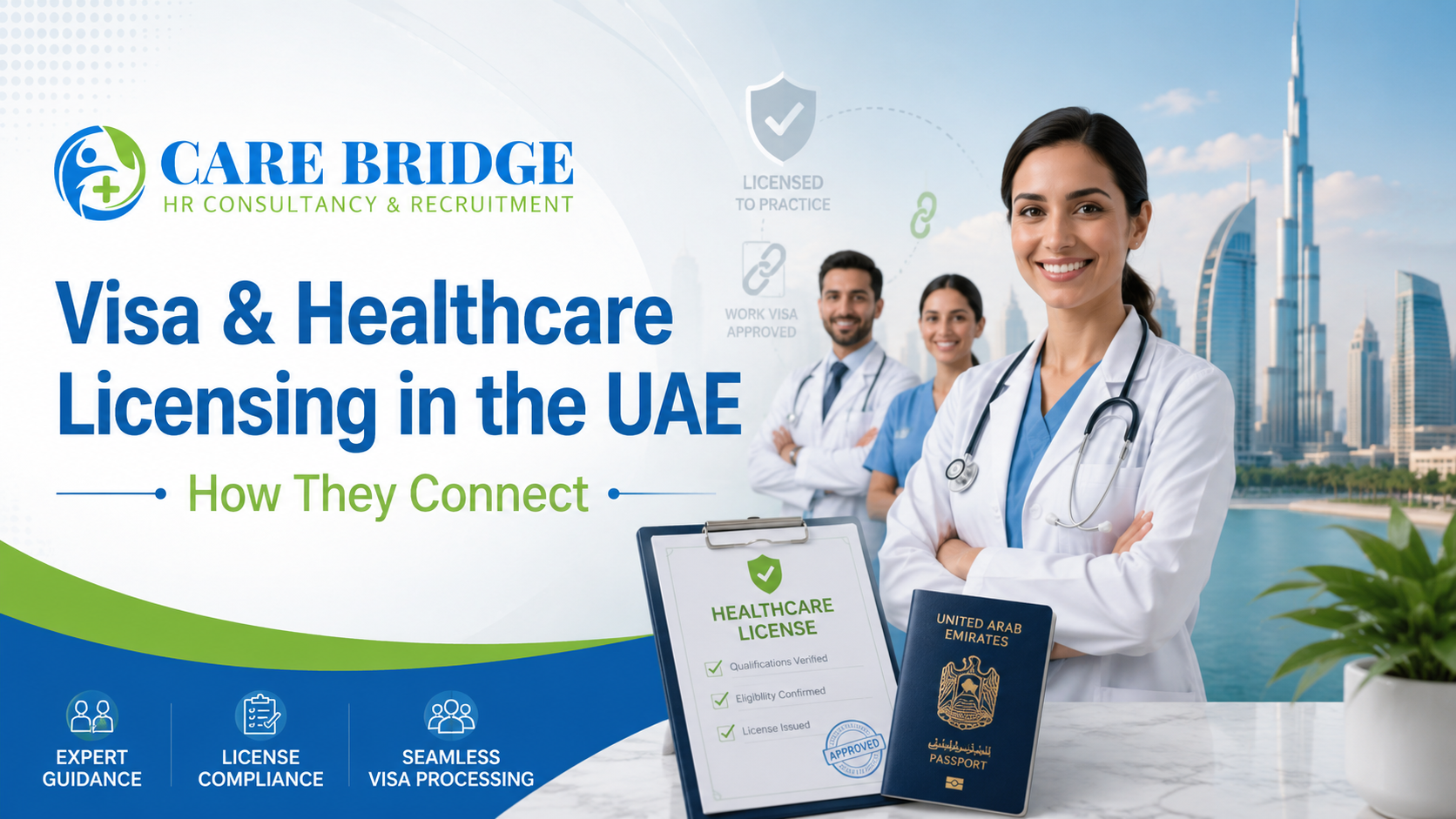
Visa & Healthcare Licensing in the UAE: How They Connect
Many healthcare professionals planning to work in the UAE focus on one question first: “How do I get my medical license?” Others focus on the visa process and ask, “Can I enter the UAE and start work once my employer sponsors me?”
Both questions matter, but they refer to two different processes. Healthcare licensing and visa approval work together, yet one does not automatically replace the other. A doctor, nurse, dentist, pharmacist, or allied health professional must understand how each step connects before accepting a role, relocating, or resigning from a current position.
In the UAE, a healthcare license confirms that a professional meets the regulatory requirements to practise in a specific role and jurisdiction. A work visa gives the professional legal residence and employment status through an employer sponsor. These pathways usually move in sequence, and delays in one can affect the other.
This guide explains how healthcare licensing and UAE visa processing connect, where professionals often misunderstand the process, and how Care Bridge Human Resource Consultancies supports candidates and employers through a smoother transition.
Healthcare Licensing and Visa Approval Are Not the Same
Healthcare licensing confirms professional eligibility. Visa approval confirms immigration and employment sponsorship. Both processes involve documents, approvals, and compliance checks, but they serve different purposes.
For example, a nurse may receive eligibility from a UAE health authority. This means the authority has reviewed the professional profile and allowed the applicant to move toward employment and activation. However, that eligibility does not mean the professional already has a UAE work visa. It also does not mean the person can start clinical practice immediately.
Likewise, a candidate may receive an employment offer from a hospital or clinic. That offer can support visa processing, but the employer still needs the correct licensing pathway before activating the professional for clinical work.
This distinction matters because healthcare roles in the UAE carry strict regulatory responsibilities. Employers must ensure that every professional has the correct authority approval, active license, and legal work status before they begin patient-facing duties.
Healthcare professionals who need support with authority-specific applications can explore CareBridge’s healthcare licensing services for DHA, DOH, MOHAP, and wider GCC licensing support.
Licensing First, Visa Second: The Usual Sequence
In most cases, healthcare professionals follow a structured sequence before they begin work in the UAE. The exact order can vary depending on the employer, authority, profession, and emirate, but the general pathway remains similar.
Typically, the process follows these steps:
- Eligibility approval or regulatory assessment
- Employer interview and contract confirmation
- Work visa and residence process
- License activation under the employer facility
- Final onboarding and start date confirmation
This sequence helps protect both the professional and the employer. It allows the employer to confirm that the candidate meets regulatory standards before investing in visa sponsorship. It also helps the professional avoid moving too early without a realistic licensing pathway.
For Dubai-based healthcare professionals, the Dubai Health Authority explains that professional registration confirms the applicant meets the requirements for the applied position and allows the professional to become part of the Dubai Medical Registry. The healthcare facility must then activate the registration into a license before the professional starts practising through the DHA healthcare professional registration service.
Why Eligibility Does Not Equal an Active License
One of the most common misunderstandings involves eligibility. Many professionals believe that once they receive eligibility, they can immediately work in the UAE. This is not correct.
Eligibility means the authority has assessed the professional profile and approved the applicant for the relevant category, title, or specialty. It does not always mean the license is active. In many cases, the license becomes active only when a registered healthcare facility links the professional to its organisation.
This matters for several reasons. A professional may hold eligibility but still need an employer contract. The employer may need to complete facility-side procedures. The visa may still require approval. The candidate may also need to complete medical fitness, Emirates ID, insurance, or onboarding steps before joining.
Healthcare professionals should therefore treat eligibility as a major milestone, not the final step. It improves employment readiness, but it does not replace employer sponsorship or license activation.
How the UAE Work Visa Fits Into the Licensing Process
A UAE work visa allows a professional to live and work legally under an employer’s sponsorship. For most employed healthcare professionals, the hiring facility starts the visa process after confirming the job offer and licensing pathway.
The visa process may include entry permit approval, medical fitness testing, Emirates ID registration, labour or free-zone procedures, and residence visa stamping or digital issuance. The exact requirements depend on the employer’s location, business structure, and relevant government channels.
The UAE Government’s official portal provides information about residence visas, including residence visas for working in the UAE, through its residence visa information page.
For healthcare professionals, timing matters. If the licensing application moves slowly, the employer may delay the visa process. If the visa faces issues, license activation may also slow down. That is why candidates should prepare documents early and keep communication clear with both the employer and licensing support team.
Employer Responsibility in Visa and License Activation
Employers play a central role once they select a healthcare professional for a UAE position. In most cases, the employer sponsors the work visa, activates the professional license, and manages employment-related immigration steps.
Employers usually handle:
- Work visa sponsorship
- Labour, free-zone, or immigration procedures
- License activation under the facility
- Facility-side authority submissions
- Visa cancellation if the employment contract ends
- Updates linked to job title, facility, or role changes
This does not mean the candidate has no responsibility. Professionals must provide accurate documents, respond quickly to requests, and avoid submitting inconsistent information. Passport details, name spelling, qualifications, experience letters, and professional registrations must match as closely as possible across all applications.
A small mismatch can cause delays. A missing attestation, expired good standing certificate, unclear experience letter, or inconsistent job title may affect licensing and onboarding timelines.
Common Misunderstandings Professionals Should Avoid
Many delays happen because candidates assume the process works like a general employment move. Healthcare recruitment in the UAE requires more planning because it links clinical regulation, immigration, and employer compliance.
The most common misunderstandings include:
Having eligibility does not mean visa approval.
Eligibility supports your professional pathway, but immigration authorities still need to approve your visa.
Having a visa does not mean you can practise clinically.
You still need the correct active healthcare license before you start patient-facing work.
A job offer does not guarantee final licensing.
An employer may issue an offer based on expected eligibility, but the authority still reviews your qualifications, experience, and documents.
Visa cancellation may affect an active license.
If employment ends, the employer may cancel the visa and deactivate or unlink the professional license. Professionals should plan transitions carefully before moving to another facility.
Licensing rules differ by authority and role.
A General Practitioner, Specialist, Consultant, nurse, pharmacist, dentist, or allied health professional may face different requirements. For role-specific guidance, CareBridge has also explained the key differences between Specialist and General Practitioner licensing in the UAE.
Why Timing Matters Before Relocation
Healthcare professionals often want to relocate quickly after receiving an offer. This is understandable, especially when the role looks attractive or the employer wants an urgent start date. However, moving too early can create financial and professional pressure.
Before relocating, candidates should confirm their licensing status, employer sponsorship plan, document readiness, and expected joining sequence. They should also ask whether the employer requires them to enter the UAE before visa processing or only after entry permit approval.
A well-planned timeline helps avoid unpaid waiting periods, repeated document requests, and unnecessary travel costs. It also gives the employer more confidence because the candidate shows readiness and compliance awareness.
Professionals actively searching for UAE or GCC healthcare roles can review CareBridge’s current healthcare job openings and align their licensing preparation with suitable employer requirements.
How CareBridge Supports Professionals and Employers
Care Bridge Human Resource Consultancies supports healthcare professionals and employers by connecting recruitment, licensing, and relocation planning into one structured pathway.
For candidates, this means clearer guidance before they invest time and money. CareBridge helps professionals understand which authority may apply, what documents they need, what gaps may exist, and how licensing connects with employment steps.
For employers, this means better candidate readiness. A healthcare facility benefits when the candidate’s licensing pathway, documents, and visa expectations align from the beginning. This reduces onboarding delays and improves workforce planning.
CareBridge supports:
- Profile assessment and licensing pathway guidance
- DHA, DOH, MOHAP, and GCC licensing support
- Document review and application preparation
- Recruitment coordination with healthcare employers
- Candidate communication during onboarding
- Guidance on licensing, activation, and relocation steps
This approach helps both sides avoid confusion. The professional understands the process, and the employer gains a more prepared candidate.
FAQ: Visa and Healthcare Licensing in the UAE
1. Is UAE healthcare licensing the same as visa approval?
No. Healthcare licensing confirms that you meet professional regulatory requirements. Visa approval confirms your legal right to live and work in the UAE under an employer sponsor. You usually need both before you can start work.
2. Can I work in a UAE hospital if I only have eligibility?
No. Eligibility does not always equal an active license. A healthcare facility usually needs to activate your license under its name before you begin clinical practice.
3. Can my employer start my visa before my license is active?
In many cases, an employer may start visa steps after confirming your offer and licensing pathway. However, each employer follows its own compliance process. Some may wait for eligibility before moving forward.
4. Who activates my healthcare license in the UAE?
The employing healthcare facility usually activates your license through the relevant authority. This step links your professional approval to the facility where you will practise.
5. What happens to my license if my UAE visa is cancelled?
If your employment ends and your visa is cancelled, your active license may also be affected because it is often linked to the sponsoring facility. You should confirm the transfer or reactivation process before changing employers.
6. Should I complete licensing before applying for jobs?
It depends on your role and target employer. Some candidates apply for jobs while preparing eligibility. Others secure eligibility first to improve their chances. CareBridge can assess your profile and recommend the best route based on your profession, authority, and career goals.
Conclusion
Visa approval and healthcare licensing in the UAE are separate processes, but they depend on each other. Licensing confirms professional readiness. The visa process confirms legal employment and residence status. For healthcare professionals, both must align before work can begin.
The safest approach is to follow the correct sequence: assess eligibility, secure the right employer, complete visa processing, and activate the license under the approved facility. This structure prevents delays, protects compliance, and supports a smoother move into UAE healthcare employment.
Care Bridge Human Resource Consultancies helps healthcare professionals and employers manage this journey with clarity. By combining licensing knowledge, recruitment experience, and structured candidate support, CareBridge helps professionals move from application to activation with greater confidence.