







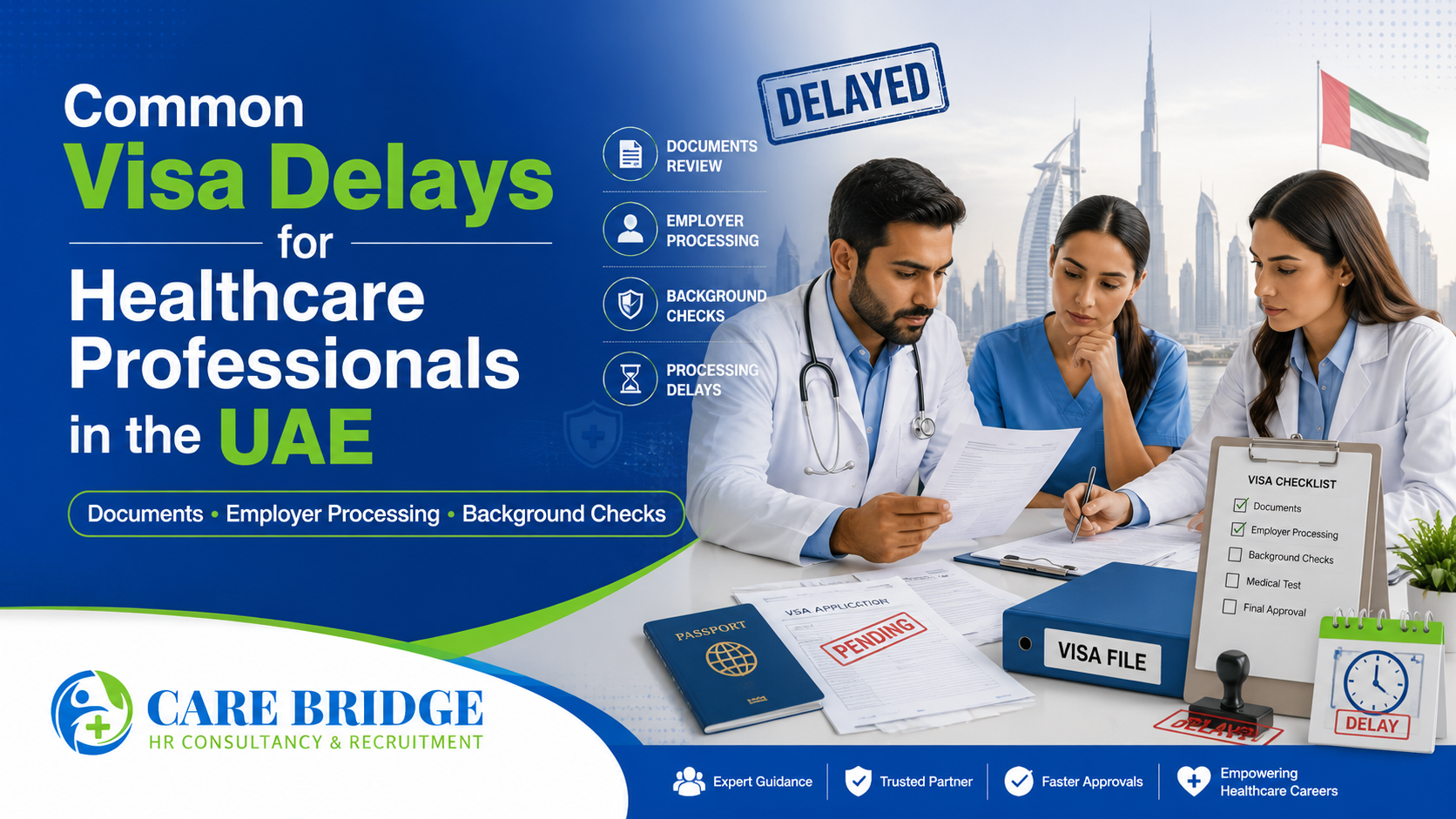
Common Visa Delays for Healthcare Professionals in the UAE
Healthcare professionals moving to the UAE often focus first on licensing. This is understandable. Doctors, nurses, dentists, pharmacists, physiotherapists, and allied health professionals must meet the correct DHA, DOH, MOHAP, or DHCC licensing requirements before they can practise.
However, licensing is only one part of the employment journey. A healthcare professional also needs the correct work visa, residence process, medical fitness clearance, Emirates ID, and employer sponsorship before joining a UAE healthcare facility.
Understanding the common visa delays for healthcare professionals in the UAE helps candidates avoid unnecessary waiting time. It also helps employers plan onboarding more accurately. Most delays happen because of incomplete documents, employer processing timelines, medical fitness steps, background checks, or gaps between licensing and visa activation.
Care Bridge Human Resource Consultancies supports healthcare professionals and employers with licensing guidance, recruitment coordination, document preparation, and onboarding support. This guide explains the most common UAE visa delays for healthcare professionals and how to reduce the risk before relocation.
Why Visa Planning Matters for Healthcare Professionals
Visa planning matters because healthcare recruitment in the UAE involves both immigration and healthcare regulation. A candidate may pass an interview and receive an offer, but they cannot start work until the employer completes the relevant employment and visa steps.
In most cases, the process follows a clear sequence. First, the employer confirms the job offer. Then the candidate and employer prepare licensing and employment documents. After that, work permit and visa steps begin. Finally, the candidate completes medical fitness, Emirates ID, insurance, and residence visa procedures.
The UAE Government explains that a residence visa for working in the UAE includes a standard work visa for employees in the government and private sectors through the official UAE residence visa for working page.
For healthcare professionals, visa delays can affect joining dates, salary start dates, relocation plans, family movement, and license activation. Therefore, candidates should prepare early and keep communication clear with the employer and licensing support team.
Professionals who want to understand how licensing and employment steps connect can review CareBridge’s guide on visa and healthcare licensing in the UAE.
Common Visa Delays for Healthcare Professionals in the UAE
The most common visa delays for healthcare professionals in the UAE usually come from document gaps, employer processing timelines, licensing status, background checks, or medical fitness steps. Some issues appear small at first, but they can slow the full joining process.
Healthcare candidates should remember one key point. Visa approval and healthcare licensing are separate processes, but they work together. A candidate may hold licensing eligibility and still wait for visa approval. Likewise, a candidate may enter the UAE on the correct visa pathway but still need license activation before clinical practice.
This is why early planning matters. A clear document checklist and realistic timeline help candidates reduce stress and help employers avoid onboarding delays.
1. Incomplete or Inconsistent Documents
Incomplete documents cause many visa and onboarding delays. Employers need accurate information to start work permit, visa, insurance, and employment procedures. If a candidate submits unclear or inconsistent documents, the HR or PRO team may need extra time to correct the file.
Common document issues include:
- Passport copies with low image quality
- Passport validity concerns
- Name spelling differences across documents
- Missing academic certificates
- Missing experience letters
- Expired professional registration
- Missing Good Standing Certificate
- Inconsistent CV and employment dates
- Delayed attestation or verification records
Healthcare professionals face extra complexity because licensing documents and visa documents often overlap. For example, an experience letter may support both licensing readiness and employer onboarding. If the document has incorrect dates or an unclear job title, it may affect more than one stage.
Candidates can reduce these delays by preparing documents before accepting an offer. CareBridge’s UAE licensing document checklist helps healthcare professionals organise key records before starting the UAE process.
2. Employer Processing Delays
Employer processing delays can also affect visa timelines. In the UAE, employers usually manage work permit, residence visa, insurance, and facility-side employment steps for sponsored employees.
The UAE Government states that the Work Bundle supports private sector employers with services such as work permits, residency visas, medical examination, and fingerprinting for Emirates ID through its official work permits guidance.
However, employers still need time to collect documents, submit applications, pay fees, coordinate internal approvals, and follow the correct system. Large hospitals may have structured HR workflows, while smaller clinics may depend on external typing centres or PRO services.
Delays may happen when the employer has a high volume of new joiners, missing trade licence updates, facility licensing issues, or incomplete candidate records. Candidates should stay responsive and provide requested documents quickly.
Healthcare professionals searching for suitable employers can review CareBridge healthcare job openings and apply with documents ready.
3. Licensing Status and Visa Timing Do Not Match
Visa delays often happen when licensing and employment timelines do not match. Many healthcare professionals assume that eligibility approval means they can start work immediately. This is not correct.
Eligibility is a major step, but it does not always equal an active license. A healthcare facility often needs to activate or link the professional license before the candidate can begin clinical duties.
For example, a nurse may receive DHA eligibility but still wait for employer activation and visa processing. A doctor may pass the licensing stage but still need facility approval, medical fitness, Emirates ID, and residence visa completion. In other cases, the employer may delay visa steps until the licensing pathway looks realistic.
Professionals should confirm their licensing status before relocation. They should ask whether they have eligibility, an active license, pending DataFlow, a required exam, or employer activation still ahead.
CareBridge explains authority differences in its guide on comparing DHA, DHCC, and MOHAP licensing.
4. Medical Fitness Test Delays
Medical fitness testing forms an important part of UAE residence visa processing. In Dubai, applicants aged 18 and above must complete a medical fitness test to confirm they are free from certain communicable diseases. Dubai’s official portal explains this requirement through its medical fitness for residence visa page.
Delays may happen when appointments are not booked early, documents are incomplete, test centres are busy, or the applicant needs additional review. In some cases, candidates may also face delays if they travel at the wrong stage or miss employer instructions.
Healthcare professionals should follow the employer’s visa instructions carefully. They should also keep passport copies, entry permit details, photos, and appointment information ready.
Medical fitness is not the same as healthcare licensing. It is part of the residence visa process. Therefore, candidates must complete both the immigration requirements and the professional licensing requirements before starting clinical work.
5. Emirates ID and Biometrics Delays
After entry and visa steps begin, candidates usually need Emirates ID registration and biometric capture. Delays can happen when appointments are unavailable, documents do not match, or the applicant misses the scheduled slot.
The Emirates ID is important because it connects to residency, banking, insurance, telecom services, and many daily UAE processes. A delay in Emirates ID steps can affect settling into the UAE, even after the visa process has started.
Candidates should check all personal details carefully. Name spelling, passport number, nationality, and date of birth should match across systems. A small error can lead to correction requests and extra waiting time.
6. Background Checks and Security Review
Some visa or employment processes may involve background checks, security review, or additional internal employer checks. These steps can vary by employer, profession, nationality, job level, and facility type.
Healthcare roles carry high responsibility. Employers may check professional history, references, previous employment, professional conduct, and licensing status. Regulators may also require verification of education, experience, and professional registration.
Candidates should be honest about employment gaps, previous visa status, cancelled licenses, or past issues. Trying to hide a problem can create larger delays later. A transparent explanation with supporting documents usually works better than unclear or inconsistent information.
7. Previous UAE Visa or Employer Cancellation Issues
Candidates who previously worked in the UAE may face delays if their old visa, labour card, insurance, or professional license was not cancelled or updated correctly. This can affect the next employer’s ability to proceed.
A previous employer may need to complete cancellation steps before the new employer can sponsor the candidate. In healthcare, the previous facility may also need to deactivate or unlink the professional license before a new facility can activate it.
This is especially important for professionals moving between emirates or employers. CareBridge’s guide on DHA license transfer between Emirates explains why authority and employer updates matter when changing roles.
8. Family Visa and Relocation Planning
Family relocation can add extra steps. A healthcare professional may secure a work visa first and then sponsor dependents later. Family visas can involve tenancy contracts, salary requirements, marriage certificates, birth certificates, Emirates ID steps, medical fitness for eligible adults, and insurance arrangements.
Candidates should not assume that family relocation will happen at the same time as their own employment visa. It may follow later, depending on employer policy and immigration requirements.
Before accepting an offer, professionals should ask whether the employer supports family relocation, health insurance for dependents, schooling support, flights, and housing allowance. These details affect both timeline and cost.
How to Reduce Visa Delays
Healthcare professionals can reduce visa delays by preparing early and staying organised. The best approach is simple: keep documents ready, respond quickly, and confirm each step with the employer.
Before relocation, candidates should:
- Check passport validity
- Prepare clear document scans
- Keep licensing documents updated
- Confirm professional registration status
- Request Good Standing Certificates early
- Match CV dates with experience letters
- Ask the employer about visa sequence
- Confirm whether family relocation is supported
- Keep communication open with HR and licensing teams
Most delays become easier to manage when candidates prepare before the offer stage. CareBridge supports candidates with document review, licensing preparation, and employer coordination, which helps reduce avoidable delays.
FAQ: Common Visa Delays for Healthcare Professionals in the UAE
1. What causes the most common visa delays for healthcare professionals in the UAE?
The most common delays come from incomplete documents, employer processing timelines, licensing status, medical fitness testing, Emirates ID appointments, background checks, and previous visa cancellation issues.
2. Can I start work if my visa is approved but my healthcare license is not active?
No. A visa alone does not allow clinical practice. You still need the correct active healthcare license under the relevant authority and employer facility before starting patient-facing work.
3. Can I receive DHA, DOH, or MOHAP eligibility before my UAE visa?
Yes. Many healthcare professionals begin licensing or eligibility steps before visa processing. However, eligibility does not equal visa approval, and visa approval does not replace license activation.
4. Does medical fitness apply to healthcare professionals?
Yes. Medical fitness testing is part of the UAE residence visa process for eligible applicants. Healthcare professionals must complete this step like other residence visa applicants.
5. Can a previous UAE employer delay my new visa?
Yes. If the previous visa, labour record, or healthcare license link was not cancelled or updated correctly, the new employer may face delays. Professionals should confirm cancellation and transfer steps before changing roles.
6. Can CareBridge help reduce visa and licensing delays?
Yes. CareBridge supports healthcare professionals with licensing guidance, document preparation, recruitment coordination, and employer communication. This helps candidates avoid common visa and onboarding delays.
Conclusion
Common visa delays for healthcare professionals in the UAE usually happen because of incomplete documents, employer processing timelines, licensing mismatches, medical fitness steps, Emirates ID appointments, background checks, or previous visa cancellation issues.
Healthcare professionals can reduce these risks with early preparation. They should organise documents, confirm licensing status, understand the employer’s visa sequence, and respond quickly to HR requests. They should also remember that visa approval and healthcare license activation are separate steps that must work together before clinical practice begins.
Care Bridge Human Resource Consultancies helps healthcare professionals and employers manage this journey with more clarity. Through recruitment support, licensing guidance, document preparation, and employer coordination, CareBridge helps candidates move toward UAE healthcare employment with fewer delays and stronger confidence.