




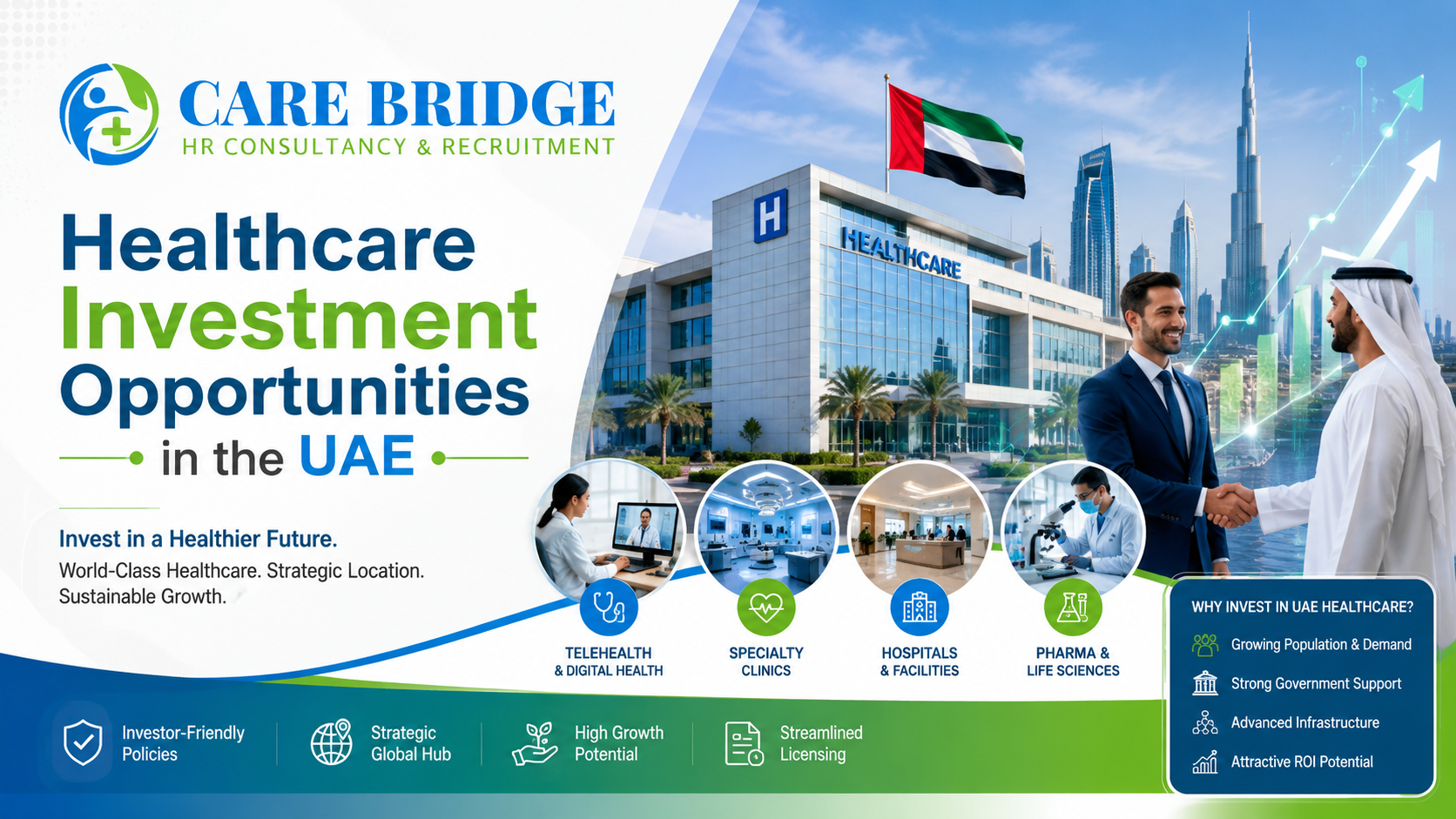
Healthcare Investment Opportunities in the UAE: Licensing, Growth & Regulatory Considerations
The UAE healthcare sector continues to attract strong interest from investors, healthcare operators, medical entrepreneurs, and international clinic groups. Demand keeps growing across private hospitals, specialty clinics, rehabilitation services, diagnostic centres, home healthcare, and telemedicine platforms.
A clear understanding of healthcare investment opportunities in the UAE helps investors enter the market with better planning. The opportunity is real, but the sector is highly regulated. Investors must understand licensing, facility approvals, professional staffing, medical director requirements, insurance expectations, and authority-specific rules before launching.
Care Bridge Human Resource Consultancies supports healthcare employers, investors, and professionals with recruitment, licensing guidance, workforce planning, and onboarding support. This guide explains the main healthcare investment opportunities in the UAE, the regulatory framework investors must understand, and the role of licensing-ready healthcare talent in building a successful facility.
Healthcare Investment Opportunities in the UAE: Why the Market Is Growing
The UAE has built one of the strongest healthcare ecosystems in the region. Its population includes citizens, long-term residents, medical tourists, and international professionals. This creates demand for high-quality, accessible, and specialised healthcare services.
Several factors support healthcare growth. The country continues to invest in health infrastructure. Private-sector participation remains active. Patients expect faster access, digital services, transparent care, and specialised treatment options. Employers also need reliable occupational health, visa medical, and staff wellness services.
The UAE Ministry of Health and Prevention states that investing in the health sector supports the UAE’s vision of strengthening community health and improving quality of life. Its official Invest in Health guide helps investors and professionals understand healthcare facility licensing, professional licensing, and advertising requirements.
For investors, this means the market is attractive but compliance-led. A strong concept must align with the correct authority, facility category, professional team, and regulatory pathway.
Private Hospital Development
Private hospital development remains one of the largest healthcare investment opportunities in the UAE. Demand continues across general hospitals, day surgery centres, women’s health, paediatrics, orthopaedics, cardiology, oncology, fertility, and rehabilitation.
However, a hospital project requires detailed planning. Investors must consider location, facility design, authority approvals, equipment standards, infection control, clinical governance, staffing models, and ongoing compliance. Hospital licensing involves more than a trade licence. It requires healthcare-specific approval from the relevant health authority.
The correct authority depends on location. Dubai facilities may fall under DHA or DHCC. Abu Dhabi facilities fall under DOH. Many Northern Emirates projects may fall under MOHAP or another local authority. The UAE Government explains that MOHAP is the federal health authority, while DOH Abu Dhabi and DHA Dubai regulate and develop the healthcare sector in their respective emirates through the official UAE health regulatory authorities page.
Investors who plan to open or acquire a facility should understand authority differences early. CareBridge explains these pathways in its guide on comparing DHA, DHCC, and MOHAP licensing.
Specialty Clinics and Medical Centres
Specialty clinics offer strong potential because they require less capital than large hospitals while still meeting clear patient demand. Investors often explore dental clinics, dermatology clinics, aesthetics, physiotherapy, orthopaedics, ENT, ophthalmology, cardiology, fertility, mental health, diagnostic centres, and chronic disease management clinics.
A specialty clinic can succeed when it combines the right location, service demand, licensing category, qualified medical team, and patient experience. Many clinics fail to plan the workforce side early enough. The facility may receive business approval, but it cannot operate properly without licensed healthcare professionals.
This is where CareBridge plays an important role. Investors need doctors, nurses, dentists, allied health professionals, and administrative staff who match both clinical and licensing requirements. CareBridge supports this through healthcare recruitment and candidate support and employer-focused hiring guidance.
Specialty clinic investors should also review professional title requirements. A clinic hiring a General Practitioner, Specialist, Consultant, physiotherapist, dentist, or nurse must match the role with the correct licensing category. CareBridge’s article on Specialist vs General Practitioner licensing in the UAE explains why title selection affects hiring and compliance.
Telemedicine and Digital Health Growth
Telemedicine continues to create new healthcare investment opportunities in the UAE. Patients now expect remote consultations, digital follow-ups, chronic care monitoring, online booking, and secure access to medical advice.
However, telemedicine is not a shortcut around healthcare regulation. Investors must comply with licensing rules, data protection, clinical governance, consent procedures, documentation standards, and authority-specific telehealth requirements. Digital health still needs qualified professionals and approved systems.
DHA provides health laws, policies, circulars, standards, and guidelines for DHA-licensed health facilities and professionals, including telehealth-related regulatory content, through its official DHA policies and regulations page.
Telemedicine investors should start by identifying the authority, service type, clinical model, technology platform, and staffing requirements. A platform that connects patients to doctors must still ensure that providers hold the correct licence and practise within their approved scope.
CareBridge has also covered this topic in its guide on telemedicine licensing in the UAE, which helps healthcare professionals and businesses understand the licensing implications of virtual care.
Licensing and Regulatory Frameworks Investors Must Understand
Healthcare investment in the UAE starts with regulation. Investors need to identify the correct facility licence, professional licence requirements, medical director responsibilities, staffing ratios, facility layout standards, equipment requirements, and inspection steps.
The licensing pathway may include concept approval, trade licence coordination, facility design review, authority application, document submission, inspection, professional staff licensing, and final activation. The sequence can vary by emirate and facility type.
Investors should also consider advertising approvals, medical waste requirements, insurance networks, patient record systems, infection control, and emergency protocols. Healthcare regulators expect facilities to protect patient safety and meet professional standards from day one.
A strong business plan should include regulatory timelines. A clinic may lease a space too early and then discover that the unit does not meet facility requirements. An investor may hire staff who cannot qualify for the intended licence. These mistakes create unnecessary cost and delay.
Workforce Planning: The Hidden Investment Factor
Many investors focus on rent, fit-out, equipment, and marketing. These items matter, but staffing can determine whether the facility succeeds.
A healthcare facility needs qualified professionals who match the licence category and service model. This may include medical directors, doctors, dentists, nurses, pharmacists, therapists, technicians, reception teams, billing staff, and operations managers.
Professional licensing can affect opening timelines. Candidates may need DataFlow, exams, eligibility, licence transfer, or facility activation. Investors should not wait until the final stage to recruit. Early workforce planning helps the facility open faster and operate safely.
CareBridge supports healthcare employers with recruitment and licensing alignment. Investors can review CareBridge healthcare job openings to understand active market demand and professional categories across the region.
Key Risks for Healthcare Investors
Healthcare investment can be rewarding, but investors should manage risk carefully.
Common risks include choosing the wrong authority pathway, underestimating licensing timelines, selecting a non-compliant facility location, hiring professionals without eligibility, ignoring telehealth rules, and launching marketing before obtaining the correct approvals.
Another risk involves cost planning. Healthcare projects often require authority fees, fit-out costs, equipment approvals, insurance arrangements, recruitment costs, and technology systems. Investors should also budget for the time between lease signing and operational launch.
The safest approach is to align three areas from the beginning: business model, regulatory pathway, and workforce plan. When these areas work together, investors reduce delays and improve the chance of sustainable growth.
CareBridge’s guide on visa and healthcare licensing in the UAE explains how licensing and employment steps connect, which also matters when hiring international healthcare professionals for a new facility.
How CareBridge Supports Healthcare Investors
Care Bridge Human Resource Consultancies helps healthcare businesses connect strategy with people. Investors may have a strong business idea, but they also need licensed professionals, compliant hiring processes, and realistic onboarding timelines.
CareBridge can support healthcare investors with:
- Healthcare recruitment planning
- DHA, DOH, MOHAP, and GCC licensing guidance
- Candidate eligibility review
- Professional document readiness checks
- Employer coordination
- Interview and onboarding support
- Workforce planning for clinics, hospitals, and specialty centres
This support helps investors avoid rushed hiring, licensing confusion, and delayed facility activation. It also helps healthcare professionals move into roles that match their qualifications and licensing pathway.
FAQ: Healthcare Investment Opportunities in the UAE
1. What are the strongest healthcare investment opportunities in the UAE?
Strong opportunities include private hospitals, specialty clinics, rehabilitation centres, diagnostic services, dental clinics, dermatology and aesthetics, home healthcare, and telemedicine platforms. The best option depends on location, demand, licensing requirements, and available healthcare talent.
2. Do healthcare investors need authority approval before opening a clinic?
Yes. Investors must obtain the correct healthcare facility licence and meet the relevant authority requirements before providing medical services. The authority depends on the emirate and facility type.
3. Which authority regulates healthcare facilities in Dubai?
Dubai Health Authority regulates many healthcare facilities and professionals in Dubai. Dubai Healthcare City facilities may follow DHCC requirements. Investors should confirm the correct authority before selecting a location or hiring staff.
4. Is telemedicine a good healthcare investment opportunity in the UAE?
Telemedicine can be a strong opportunity, but it must follow healthcare regulations. Investors need approved systems, licensed professionals, proper documentation, clinical governance, and authority-specific compliance.
5. Why is workforce planning important for healthcare investors?
Workforce planning is critical because healthcare facilities cannot operate without licensed professionals. Doctors, nurses, dentists, pharmacists, and allied health professionals may need verification, exams, eligibility, or licence activation before starting work.
6. Can CareBridge support healthcare investors in the UAE?
Yes. CareBridge supports healthcare investors with recruitment planning, licensing guidance, candidate eligibility review, and employer coordination. This helps investors build compliant teams and reduce delays during launch.
Conclusion
Healthcare investment opportunities in the UAE continue to grow across private hospitals, specialty clinics, telemedicine, rehabilitation, diagnostics, and allied health services. The market offers strong potential, but success depends on more than capital. Investors must understand licensing, regulatory frameworks, facility approval, professional staffing, and authority-specific requirements.
A well-planned healthcare investment starts with the right model, the right location, and the right compliance pathway. It also depends on qualified professionals who can meet licensing standards and support safe patient care.
Care Bridge Human Resource Consultancies helps healthcare investors and employers connect opportunities with compliant workforce solutions. Through licensing guidance, recruitment support, and candidate coordination, CareBridge helps healthcare businesses build stronger teams and prepare for sustainable growth in the UAE healthcare sector.