





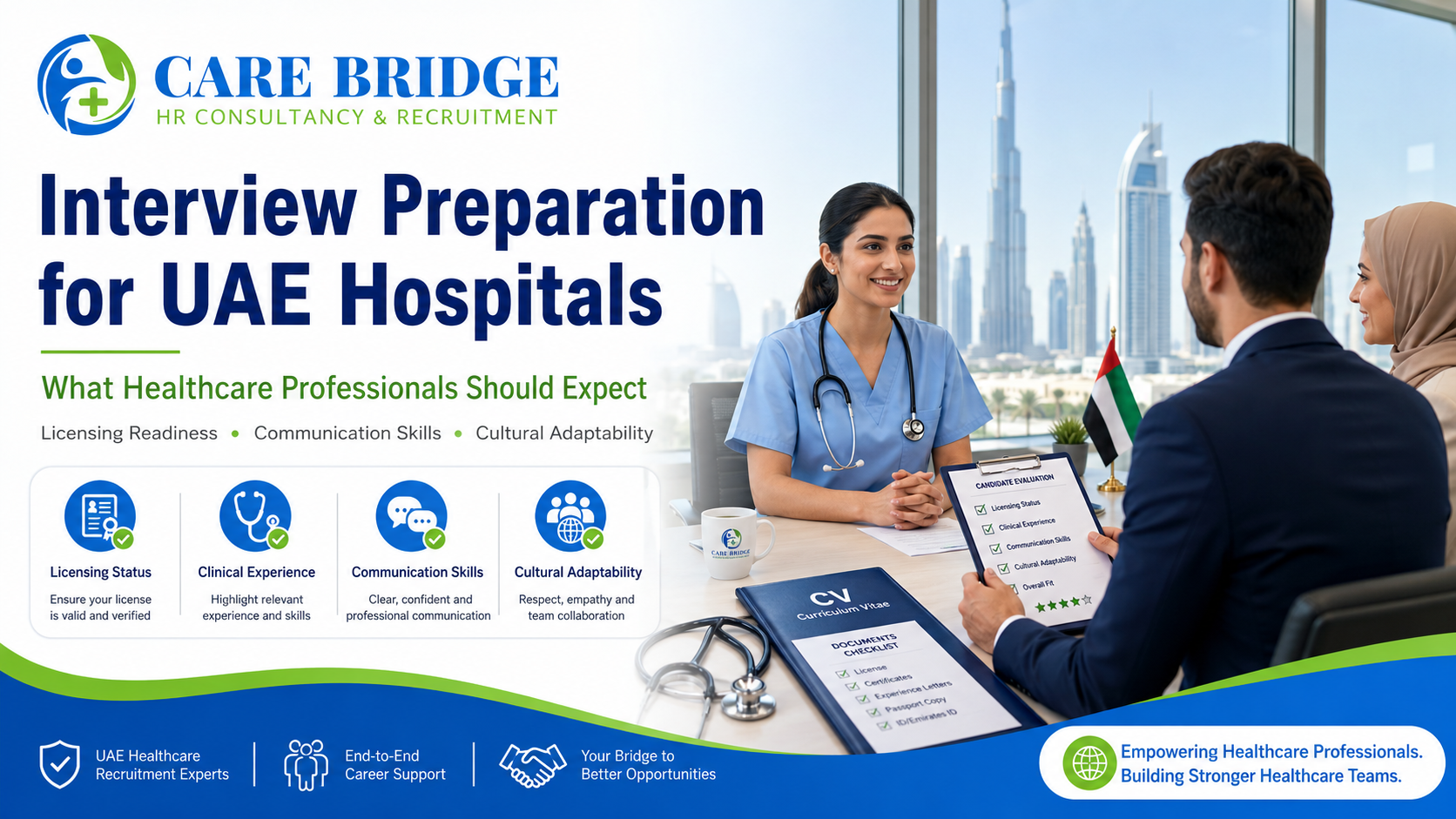
Interview Preparation for UAE Hospitals: What Healthcare Professionals Should Expect
Securing an interview with a UAE healthcare facility is a major milestone. It means your profile has attracted interest, your experience may match an employer’s needs, and your career move is becoming more realistic. However, an interview does not guarantee a job offer. Healthcare employers in the UAE assess more than clinical knowledge. They also review licensing readiness, communication style, professional judgement, cultural adaptability, and the candidate’s ability to work in a regulated healthcare environment.
For doctors, nurses, dentists, pharmacists, and allied health professionals, interview preparation should start before the meeting invitation arrives. A strong CV may secure the interview, but preparation helps you convert that opportunity into an offer.
Care Bridge Human Resource Consultancies supports healthcare professionals through recruitment, licensing guidance, document preparation, and employer coordination. This guide explains what UAE hospitals evaluate during interviews, the questions candidates should expect, and the practical steps professionals can take to present themselves with confidence.
Why UAE Hospital Interviews Require Careful Preparation
The UAE healthcare sector serves a highly diverse population. Hospitals and clinics work with patients, families, and professionals from many cultures, languages, and medical backgrounds. Employers therefore need healthcare professionals who can deliver safe care, communicate clearly, and adapt to UAE workplace expectations.
Interviews also connect closely with licensing. A candidate may perform well in a discussion, but the employer still needs to know whether the professional can secure DHA, DOH, MOHAP, or DHCC approval. This is why UAE healthcare interviews often include questions about eligibility, DataFlow, exams, active licenses, and document readiness.
Professionals who are unsure about the correct licensing route can review CareBridge’s guide on comparing DHA, DHCC, and MOHAP licensing before attending interviews.
What UAE Hospitals Evaluate During Interviews
UAE hospitals and clinics usually assess candidates across several areas. The weighting may differ by role, specialty, and facility type, but most employers focus on the same core factors.
1. Licensing Status and Readiness
Employers want to know whether you already hold eligibility, an active license, or a transferable license. They may ask which authority applies to your target location. For Dubai, DHA registration confirms that the professional meets the requirements for the applied category, title, and specialty, but a healthcare facility must activate the registration into a license before the professional can practise. Candidates can review the official DHA healthcare professional registration service for more context.
In Abu Dhabi and other UAE licensing pathways, employers also check whether your education, experience, and licensure meet the relevant criteria. The UAE Professional Qualification Requirements explain the framework used to assess healthcare professionals through the official DOH PQR reference.
2. Clinical Experience Relevance
Employers need to know whether your experience matches the role. A hospital hiring an ICU nurse will look for recent ICU exposure, critical care competencies, infection control awareness, and experience with high-acuity patients. A clinic hiring a General Practitioner may focus on outpatient management, chronic disease care, patient communication, and referral judgement.
Specialist doctors should prepare to discuss case volume, procedures, diagnostic approach, teamwork with other departments, and patient outcomes. CareBridge also explains role-based differences in its guide to Specialist vs General Practitioner licensing in the UAE.
3. Communication Skills
Clear communication matters in every UAE healthcare setting. Employers assess how candidates explain clinical decisions, speak with patients, update colleagues, and handle difficult conversations. They may also look at language ability, listening skills, confidence, and professionalism.
Avoid long, unclear answers. Give structured responses. Use examples from real clinical situations. Explain what happened, what you did, and what result followed.
4. Cultural Adaptability
UAE hospitals employ multicultural teams and treat patients from many nationalities. Interviewers may ask how you work with people from different backgrounds, how you manage patient expectations, and how you respect cultural preferences during care.
Cultural adaptability does not mean changing your professional standards. It means applying those standards with respect, patience, and awareness.
5. Professionalism and Reliability
Employers want candidates who arrive prepared, communicate honestly, and understand compliance. They may check whether your documents are ready, whether your CV matches your experience letters, and whether you understand your notice period and joining timeline.
A professional who gives clear answers about availability, license status, and documentation creates more confidence than a candidate who gives vague or inconsistent details.
Common UAE Healthcare Interview Questions
UAE hospital interviews may include clinical, behavioural, licensing, and relocation questions. Candidates should prepare for all four types.
“Why do you want to work in the UAE?”
This question tests motivation. Avoid generic answers such as “better salary” or “career growth” only. A stronger answer connects your professional goals with the UAE healthcare environment.
For example, you can mention your interest in working in a multicultural healthcare system, gaining international exposure, contributing to patient care standards, and developing your career in a regulated healthcare market.
“Tell us about your current clinical responsibilities.”
Keep your answer clear and relevant. Mention your department, patient type, procedures, caseload, shift structure, reporting line, and key responsibilities. Focus on duties that match the UAE role.
“How do you handle patient safety incidents?”
Patient safety is a serious topic. Employers want candidates who act quickly, escalate appropriately, document accurately, and learn from incidents. Do not blame others. Show accountability.
A strong answer may include immediate patient assessment, senior notification, incident reporting, communication with the team, documentation, and preventive action.
“What is your experience with multicultural teams?”
Give a real example. Explain how you worked with colleagues from different backgrounds, handled communication differences, and maintained teamwork. UAE employers value candidates who cooperate well across cultures.
“How do you manage a difficult patient or family member?”
Show empathy and structure. Explain that you listen first, remain calm, clarify concerns, involve senior staff when needed, and follow hospital policy. Do not describe confrontation as your first response.
“What is your licensing status?”
Answer honestly. State whether you have an active license, eligibility, DataFlow completed, exam passed, or documents under preparation. If you need support, mention that you are preparing the required documents and understand the licensing process.
Candidates preparing their documents can use CareBridge’s UAE licensing document checklist before interviews.
Clinical Scenario Questions: What to Expect
Many UAE hospitals ask scenario-based questions. These questions help employers assess your judgement, not only your memorised knowledge.
Doctors may receive questions about emergency assessment, differential diagnosis, referral decisions, documentation, informed consent, or escalation. Nurses may face questions about medication safety, infection control, deterioration, handover, or patient monitoring. Allied health professionals may receive questions about assessment methods, treatment planning, scope of practice, and multidisciplinary teamwork.
Use a simple structure when answering:
- Identify the patient’s immediate risk.
- Explain your first action.
- State who you would inform.
- Mention documentation and policy.
- Finish with patient safety and follow-up.
This structure keeps your answer active, safe, and professional.
Practical Tips Before the Interview
Preparation creates confidence. It also shows employers that you take the opportunity seriously.
Research the Hospital or Clinic
Review the facility’s website, specialties, location, patient profile, and service model. A large hospital may expect different answers from a private outpatient clinic. Understand whether the employer focuses on acute care, elective services, long-term care, aesthetics, rehabilitation, homecare, or specialty medicine.
Review Your Scope of Practice
Your scope of practice affects what you can safely do in the UAE. Review the role title, authority requirements, and your expected duties. Do not overclaim. Employers prefer candidates who understand their professional limits and know when to escalate.
Prepare Your Licensing Documents
Before the interview, check your passport, degree certificates, experience letters, license or registration certificates, good standing certificates, DataFlow reports, and exam records. MOHAP states that medical facilities can apply for licensing or re-licensing of healthcare professionals such as doctors, nurses, and technicians through its MOHAP health professional licensing service.
Practise Clear Answers
Prepare answers for your experience, strengths, clinical achievements, patient safety approach, teamwork style, and reasons for moving to the UAE. Keep answers specific and concise.
Prepare Questions for the Employer
Ask about department structure, patient volume, shift patterns, licensing support, onboarding, probation period, and training. These questions show maturity and help you understand whether the role fits your goals.
Professionals who want support with UAE job matching can review CareBridge healthcare job openings and compare opportunities before applying.
How to Present Your Licensing Status Professionally
Many candidates feel nervous when they do not yet have an active UAE license. This is common. The key is to explain your status clearly.
If you have eligibility, say which authority issued it and when it expires. If you have passed an exam, mention the authority and date. If your DataFlow is complete, explain which documents were verified. If your application has not started, say that you are ready to begin and have your documents prepared.
Avoid saying “my license is almost done” if you cannot prove it. Employers need accurate details because licensing affects joining dates and visa planning. CareBridge explains this connection in its guide on visa and healthcare licensing in the UAE.
Mistakes to Avoid During UAE Healthcare Interviews
Some candidates lose strong opportunities because they make avoidable mistakes.
Do not exaggerate your clinical experience. Interviewers often ask follow-up questions and may notice gaps quickly. Do not criticise previous employers or colleagues. Keep your answers professional. Do not give unclear licensing information. If you do not know the answer, say so and explain that you will verify it.
Avoid focusing only on salary in the first interview. Compensation matters, but employers first need to confirm clinical suitability, licensing readiness, and cultural fit. Salary discussions usually become stronger after the employer confirms interest.
Also avoid attending without a stable internet connection if the interview is online. Test your camera, microphone, lighting, and background before the meeting. Dress professionally, even for a virtual interview.
How CareBridge Helps Candidates Prepare
Care Bridge Human Resource Consultancies supports healthcare professionals at each stage of the UAE recruitment process. The team helps candidates understand licensing routes, prepare documents, match with suitable employers, and attend interviews with better confidence.
CareBridge supports candidates with:
- Profile and eligibility assessment
- DHA, DOH, MOHAP, and GCC licensing guidance
- CV and document readiness checks
- Interview preparation support
- Employer coordination
- Job matching for healthcare roles
- Relocation and onboarding guidance
This support helps candidates avoid confusion and present themselves professionally. It also helps employers meet prepared candidates who understand UAE healthcare expectations.
Healthcare professionals can start by exploring CareBridge’s recruitment support for candidates and preparing for interviews before opportunities arise.
FAQ: UAE Hospital Interview Preparation
1. What do UAE hospitals look for in healthcare interviews?
UAE hospitals usually assess clinical experience, licensing status, communication skills, patient safety awareness, cultural adaptability, and readiness to join. They also check whether your documents support your claimed experience.
2. Do I need a UAE license before attending hospital interviews?
Not always. Some employers interview candidates before licensing is complete. However, having eligibility, DataFlow, or a clear licensing plan can improve your chances and help the employer estimate your joining timeline.
3. What should I say if I do not have DHA, DOH, or MOHAP eligibility yet?
Be honest. Explain your current status, what documents you have prepared, and whether you understand the authority pathway. You can also mention that you are ready to start licensing once the employer confirms the role.
4. Will UAE hospitals ask clinical questions?
Yes. Many hospitals ask clinical or scenario-based questions. These questions test judgement, patient safety, escalation, documentation, and practical decision-making.
5. How should I answer salary questions?
Give a professional answer based on your experience, role level, and market expectations. You can say that you are open to a fair package aligned with the responsibilities, licensing requirements, and benefits. Avoid making salary the main focus of the first interview.
6. Can CareBridge help me prepare for interviews?
Yes. CareBridge supports healthcare professionals with recruitment guidance, licensing readiness, document review, and interview preparation. This helps candidates approach UAE hospital interviews with confidence and clarity.
Conclusion
A UAE hospital interview is more than a conversation about your CV. It is a professional assessment of your clinical ability, licensing readiness, communication style, and suitability for a multicultural healthcare environment.
Healthcare professionals who prepare properly improve their confidence and credibility. They understand the employer, review their scope of practice, organise licensing documents, practise structured answers, and explain their status honestly.
Care Bridge Human Resource Consultancies helps candidates move through this process with better clarity. Through recruitment support, licensing guidance, interview preparation, and employer coordination, CareBridge helps healthcare professionals turn UAE interview opportunities into realistic career moves.